Church Software Programs Introduction
Church software programs specialize in reducing costs for church operations and help to grow the church. The software helps automate administration, management, and reporting. These church software programs are more often called church management software or ChMS, church databases, or simply church software.
These church software programs can include a vast array of features but most church software programs include a membership database, mass communication, report generation, donations, accounting, payroll, child check-in, and event registration. In addition to these functions, the software will offer security and multi-user access. Real good software will follow all IRS, FASB, and other governmental guidelines as well.
The ‘WHAT’ Questions
What’s Wrong With A Free Church System?
Let’s take a quick moment to talk about the feasibility of free church software programs. People love free stuff until it comes back to bite them. Unfortunately, some churches still choose a free church software program hoping to save a buck. In the majority of cases though, it costs the church more in time and money.
For example, free systems lack the efficiencies that paid church software solves. Another concern is a less responsive support team. Developers involved with free church software do this as a side part-time gig. Another consideration is, will they be there when things go badly. The worst scenario is they just pull the plug on the project leaving the remaining users with nothing to use?
So if free systems don’t work, what’s a church supposed to do? Research as many options as possible!
What’s Church Software Balance?

Church software balance is a topic that’s rarely discussed.
What’s church software balance?
Church software balance is where the solution can equally address the four areas. Church software can be great at church communication but stink at financial accountability. In fact, many church software companies don’t address financial accountability at all. An example of this is church software companies that recommend Quickbooks because their solution doesn’t provide an integrated financial module. These companies still charge the same price as companies that include a financial module but without the huge technical support overhead of supporting a financial module. What’s worst is the church pays another fee for s financial package, like Quickbooks, thus wasting more money.
The software companies that lack a financial package typically recommend Quickbooks. Quickbooks has its own problems like safeguarding payroll data and not using a fund-based approach for churches. We strongly recommend churches use fund-based accounting software so they stay out of trouble and that their financial records are all in one package.
The Four Primary Areas
- Communication — the ability to mass communicate to members or visitors.
- Efficiency — this is when the software makes each repetitive process as smooth and fast as possible.
- Financial Accountability — this means the software has donation, accounting and payroll in one system.
- Church Growth — church software, in most cases, will help to increase church growth when used correctly. The question is how much church growth will happen?
What’s a good church software program balance? Typically the church wants to have these four areas complement each other as equally as possible. Church communication works hand in hand with church growth, which with more church growth the church needs more efficiency. As the church grows, financial accountability needs to handle more transactions. As you can see, each of these four areas ties in with each other and the church needs all of them.
What Are The Benefits Of A Church Software Program?
Churches benefit from a strong and robust church management software system. Church software helps in many areas like communication, membership data, donation recording, accounting, and payroll.
What are some of the benefits of a church software program?
- They can review church attendance trends of their congregation.
- The church stewardship committee can review donations for the congregation as a whole or for each donor.
- The church leadership can properly plan for projects or missions by using up to date financial statements.
- Church software programs help to cut down on the time needed to enter data and produce reports for the church team.
- It saves the church money by mass communicating with the church’s members electronically instead of snail mail.
- It empowers the typical user with the right security role so they can help the church during events, Sunday sermon, and so on.
What 8 Church Software Features Are Important?
Church software features are vast in most church software programs on the market today. However, the ones mentioned below are non-negotiable. In other words, the church should not look at any package that doesn’t have these in an all-in-one system. These features below are the bare necessities, so to speak.
Online Donations
Having the ability to take online donations is crucial today when the vast majority of people do not carry cash or a checkbook. Administering online donations needs a smooth and fast process so that all online donations tie to the correct donor after the payment processes.
Link To Accounting
Having a link to the accounting books from the donations allows for the system to auto-generate the deposit in the accounting books. This saves the bookkeeper time when entering deposits into the accounting books because the donation deposit is already taken care of.
Manage People & Visitors
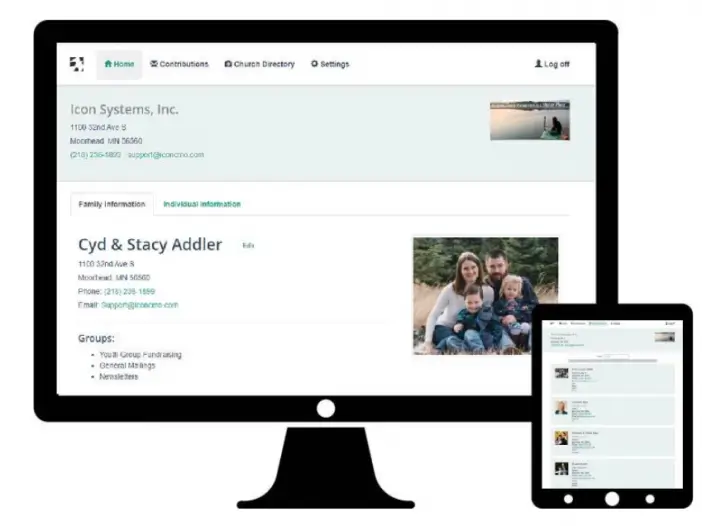
The church needs the ability to update (edit, archive, delete, and add) their members’ data. Additionally, it’s important to have a member portal for your church members. Managing members and visitors hooks into the communications side of the church management software.
Church Communication
Use your church management software to send reminders and last-minute updates to church members. Or quickly and efficiently send email messages with an attachment to individuals or groups. Email communication between the church and its members should include a history so staff can review previous emails.
Group Management
Group management encompasses many tasks like taking group attendance, communicating either by texting or emailing to group members, reporting on groups, and so on.
Pledge Management
Churches must know how much money they can expect to come in so they can budget the next fiscal year. Pledging helps church donors to set a goal for themselves each year.
FASB Compliance
Reports based on fund accounting and following the Financial Accounting Standards Board reporting standards No. 958 are very important. The reports must follow IRS and FASB regulations.
Complete Fund Budgeting
The church leadership needs to create a church budget for each fund to manage revenues and expenses effortlessly. They need the ability to compare the actual revenue and expenses to the budget to see where the organization might be falling behind or where there might be some monetary surplus.
What Questions To Ask When Choosing A Software
Below is a small sample of some questions to get the thinking gears going in your head. When looking for an all-in-one system, the church evaluation team should look at this list to choose which ones might fit best for their evaluation. Of course, the team should add other questions that they don’t see here.
- Can the church software organize the data in a logical way?
- Is it easy to enter data, accomplish tasks, and navigate the system?
- Are you able to generate accurate reports that make sense?
- Does it allow various staff and volunteers to work on the system simultaneously to accomplish shared goals?
- Can it provide financial analysis to show where the organization is at financially?
- Is the database secure?
- Does it have an API interface?
- Is it an all-in-one church software program?
- Does it promote church growth by giving church leaders the data they need to follow up?
- Can the church communicate effectively to their church members?
What About Church Software Pricing?
We typically advise churches to ignore church software pricing until they found a package that fits the majority of their needs. However, there’s one exception to this rule for new churches. When new churches open their doors they have limited resources like cash. Why would we go against our own advice? Because any church, new or old, should have a software package in place on the first day (more on that later) of operation even when resources are tight.
Why does price matter so much more with a new church than an established church?
If the church software is thousands of dollars, the church may not be able to afford that expensive package starting out. For most newer churches, a package in the thousands is a pretty quick disqualifier. However, it’s more important to have something in place than nothing at all no matter if you are an old or new church. Once the church is up and running and financially sound, then they could change packages to a more expensive system and robust software, if needed. The important part is that the church had a database in place when they opened their doors and started taking donations.
The ‘WHO’ Question
Who Should Use Church Management Software?
The quick answer is — any operating church should have church management software no matter their size. Unless you are a church of one family, it’s foolish to not have church software from the start.
Small Church
Small churches are organizations typically under 125 people. Small churches are organizations where everyone knows each other. Although everyone knows each other, the church still needs a structured database that manages membership and donations that work well with limited staff or volunteers.
Medium Church
Medium churches are churches that have 250 or more church members. Typically the church administrators need more advanced features like mass communication, quick online donation processing, and so on. These churches experience growing pains as they grow from a smaller church into one where people may not know everyone.
Large Church
Large or mega-churches will have 1500 or more church members. Church software in larger churches needs to work like medium church software but on steroids. For large organizations, the efficiency has to increase tenfold so the organization can keep up with a constantly changing membership.
Church Size Doesn’t Matter – Having Church Software Is Imperative
As we see above, it doesn’t matter the size of the church when it comes to using church software. As organizations grow, using church software is imperative, so the organization saves time and money. However, small organizations need it as well. Smaller churches have fewer staff to accomplish weekly tasks. They need complete accountability to the penny for their monetary resources. The best-case scenario is to implement the church software as soon as you receive the first donation.
The ‘WHY’ Question
Why Church Management Software?
An effective organization starts with the tools they use. Let’s use a farming analogy. There was a time that horses tilled the land for the farmers until the tractor came along. This made the farm more effective in its work, thus it could expand to farm more acres of land. Having effective software works the same way. The more effective it is, the better the organization can react to community needs, growth, and other church or community issues.
What makes the church management software effective?

Contribution management
Churches must be fiscally responsible for how they spend their resources, but they must first get those resources – aka donations. A good church software program can do both.

Effective Follow Up
Church growth relies on many working parts within the organization. One of those working pieces is software that helps to facilitate visitor follow-up or pastoral visitation with church families.

Communication
Church communication is essential to keeping everything running smoothly in the organization. For example, volunteers need to know where to show up in the morning or donors need their tax receipt emailed to them.

Specialized Church Software
Church software is specifically designed and tailored to work for churches. Business software, like customer relationship management (CRMs) systems or for-profit accounting systems, simply won’t work well. Don’t be the church that fails in its first year because of the wrong software.
Proper Reports
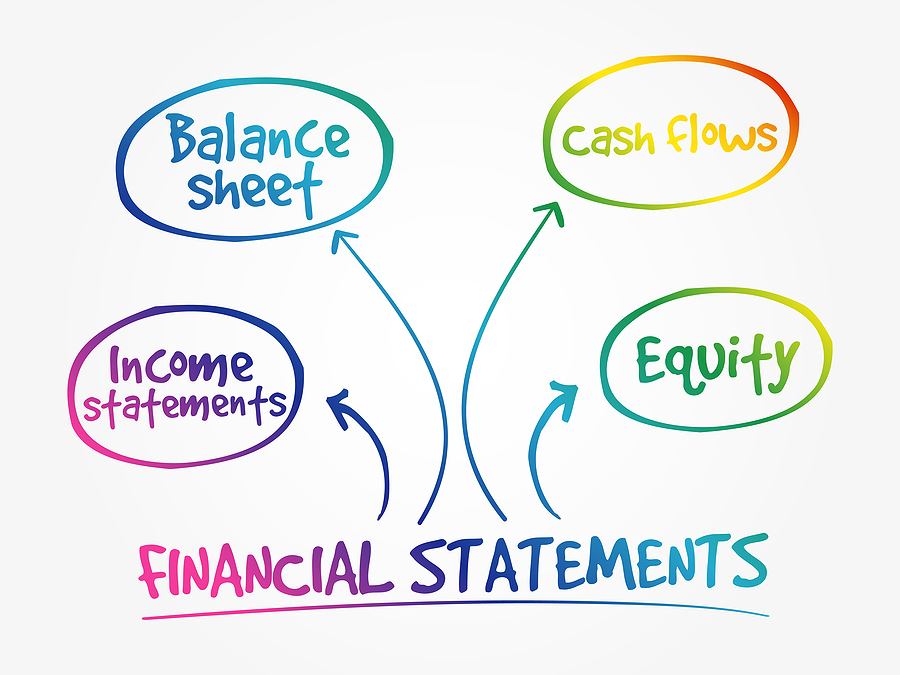
Having proper reports that obey all IRS and FASB guidelines is essential to keeping the church on the straight and narrow path. The church must avoid legal actions simply because the reports were not right.

Technical Support
It would be great if users didn’t need help with any product they use daily or weekly. But we all know that is wishful thinking. A system must include support.

Hardware Maintenance
Using a SaaS-based system requires servers for the users to interact with. These servers need maintenance, as well as the users, expect data backups in case of failure in the future.
Disclaimer: Technical support is never a replacement for sound legal and/or accounting advice from a licensed practitioner.
The ‘WHEN’ Question
When Should The Church Start Using Church Software?
Short answer — the church should have a software program in place before they open the doors for their first service.
The longer answer is that churches need to decide on how they want to enter their church members and donations into the database. It’s always harder to go back and enter data from many weeks or months ago. Entering data should follow a consistent process so that reports give consistent, reliable, and accurate data. These processes, outlined by church leadership, ensure the church staff and volunteers follow the same process from week to week. These processes stay the same when volunteers and staff change.
Setting Up Internal Data Entry Processes
What does it mean to have the same process to enter data?
With any software program, there are multiple ways to enter data into the system for donations, members, payroll, and accounting records. Let’s look at some example questions like:
- Will we enter in member birthdays?
- Will we enter in middle initials or the full middle name?
- Are we going to enter in alternate addresses?
- How should we enter businesses?
- Will we track genders of individual members?
- Will we enter emails and cell phones for communicating?
- How to enter gifts-in-kind donations?
Let’s use an example with entering member names. Some churches prefer capitalized letters for member names while others will capitalize the first letter only. Keeping those two scenarios in mind, imagine what a church directory might look like if staff members enter names into a database in two different ways. Some names in the directory would be all capitalized while other records will have the first letter capitalized. The directory would look pretty ugly with this type of data inconsistency.
Having a consistent data entry process for entering data into the church’s database would solve the ugly directory issue among many others. One rule about entering data that holds true in every case — ‘garbage in, garbage out’. When entering data in an inconsistent manner it outputs inconsistent reports.
Summarizing The 4-W’s Of Church Software Programs
When evaluating larger purchases, a person can use the 4-W approach to answer some of the most important initial questions. For the first round, the questions in this blog can whittle down the large list of software vendors to five or eight great possibilities. As tempting as it may seem, churches should ignore church software review sites and evaluate the vendors using their own criteria to get the best overall result.
This blog will give you a good sense of the following:
- if the five to eight solutions have the primary features needed,
- if there’s a good balance between efficiency, church growth, communication and financial accountability,
- tells the church what category they belong in — a small, medium or large sized church, so they can match their organization to the right software,
- it tells them that a new church is better to start with an affordable package, so they have the software on the first day of operation,
- why churches need software,
- and initial questions that the church can use to start the conversation and evaluate software providers.
By using the 4-W approach when evaluating software the church can save a lot of time and energy by narrowing down a large list of software companies quickly. This focuses the attention on the few remaining software companies that can handle the church’s specific needs. By narrowing down, the church can take a deeper dive into each of the remaining software candidates and choose the one that fits their specific criteria the best.