
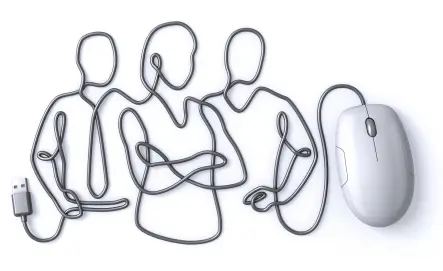
As school resumes around the country, it’s time again to fill Sunday school rooms with little balls of energy. While registering my three boys for Sunday school last year, I was asked for not only my general contact information, but also my email address. Yes! Finally my church was taking the next steps to reach out to me in a different method other than snail mail. Next came the remark in the Sunday bulletin, “Like us on Facebook.” So I did.
Social Networking appears to be touching all aspects of our lives, from work, to school, to religious institutions. Social networking sites, on-the-spot communication devices and email can enhance communication, can foster faith sharing and deepen relationships. So when the youth director requested the email address and cell number of my pre-teen, I had no hesitation in providing this information to him.
Guidelines
The following list provides a few guidelines for healthy boundaries and safety of the church to the virtual world of networking and communication. Every organization should develop their own policy to fit the needs of the parish.
- All communication sent digitally (email, social networking sites, notes or posts, etc.) is NOT CONFIDENTIAL and may be shared or reposted to others.
- All transcripts of online text chats, video chats, blogs or video blogs should be saved when possible.
- Adults who minister to children and youth and who want to connect via a social networking website are strongly encouraged to set up a group account that all may join.
- All clergy and adults engaged in ministry with youth should consider the content and nature of any post that will be read by or visible to youth. Your words are often considered the voice of the church.
- Email is not appropriate for matters that are pastorally or legally sensitive, emotionally charged or require extensive conversation. If an email message is longer than a couple of sentences, then it might more properly be addressed in a personal conversation.
- In the world of social media, healthy boundaries and safety practices must mirror the physical world. For example, a youth leader would not hold a conversation alone with a child , and should also not have a private chat on Facebook.
Using Social Media allows your organization to reach diverse members within your church, from the college student to the working mom like me. Implementing guidelines surrounding how your organization engages in Social Media will help ensure safety to your staff and members. Learn about additional steps you can take to ensure safety with background checks of staff and volunteers through IconCMO.
Did you enjoy this post? Check out related articles:
3 Essential Rules for Churches Using Social Media
Use Pinterest to Promote Your Church